Table of Contents
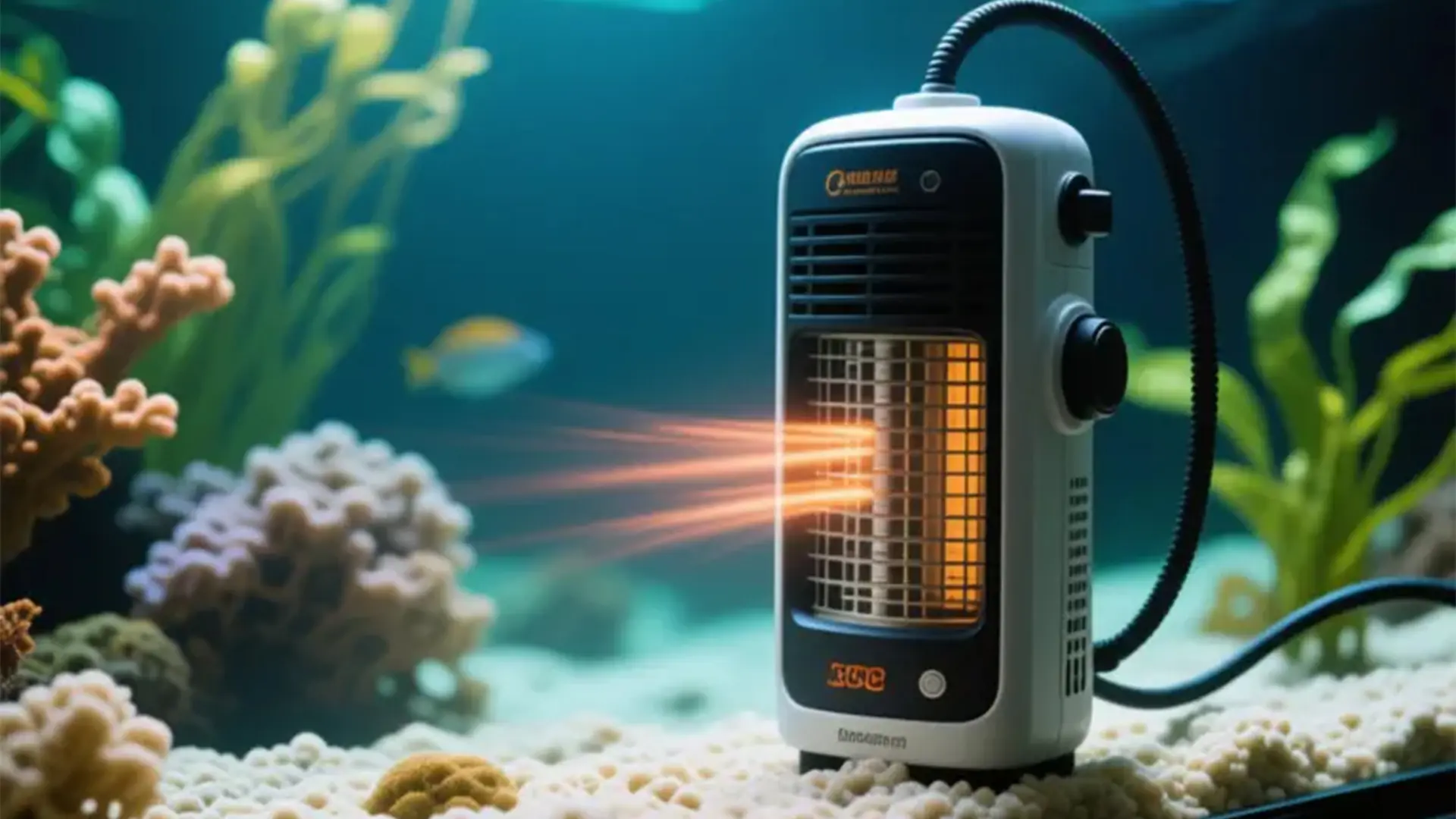
For Malaysia, most tropical community tanks stay healthy at 24–27 °C. Choose an aquarium heater (Malaysia) that provides about 2.5–5 W per litre (or 3–5 W/gal), split across two units for safety, place near strong flow, and verify with a separate thermometer. In hot flats that rarely drop below 26 °C, use a thermostatic controller to prevent overheating and keep temperature stable—stability matters more than the exact number.
1) Why Heating Matters in Malaysia (Stability > Everything)
In fact, even in tropical cities like Kuala Lumpur, a reliable aquarium heater Malaysia setup is essential to keep those temperature swings under control. Tropical fish tolerate warmth, but sudden changes (±2–3 °C in hours) cause stress, infections, and appetite loss. A correctly sized aquarium heater Malaysia gives you stability, not just heat—protecting bettas, tetras, gouramis, and most planted tank inhabitants.
Experience note (Aqua Arte Kepong): In Kepong high-rise units, we see tanks at 25 °C afternoon, dropping to 22–23 °C overnight with strong AC. A small, well-placed heater plus controller flattened those swings <1 °C, and fin-rot cases disappeared within weeks.
2) Heater Types (Pros/Cons, What Works Best Here)
a) Glass Submersible Heaters
Pros: Affordable, accurate, easy to replace.
Cons: Fragile; use a guard; avoid knocks during maintenance.
Best for: Small–mid freshwater tanks.
b) Titanium/Metal Heaters (with external controller)
Pros: Tough, fast response; good for larger tanks or offices.
Cons: Usually pricier; needs a reliable controller.
Best for: 3–6 ft planted/community tanks; koi fry grow-outs indoors.
c) Inline Heaters (plumbed to canister filter)
Pros: Invisible in tank; even heat distribution.
Cons: Requires external filter and secure plumbing.
Best for: Display aquascapes where aesthetics matter.
d) Integrated Heaters (in-filter or in-sump)
Pros: Hidden; safe from fish; tidy.
Cons: Tied to that filter/sump flow; sizing can be limited.
Best for: Sump systems; custom builds (see: Custom Aquarium Malaysia).
Choosing by Tank Size & Fish Type
Not every heater suits every tank. Nano aquariums under 40 litres do best with compact 25–50 W units that react fast but won’t overheat small volumes. Mid-size community tanks (2–3 ft / 60–120 L) need dual 75–150 W heaters to spread heat evenly. For discus, goldfish, or marine tanks, pick models with titanium housing and external thermostats for reliability. In other words, sizing isn’t just about water volume—it’s about fish behaviour and placement.
Aggressive or large species like cichlids may hit heaters; always add protective guards or mount heaters inside sump compartments. These small choices keep your aquarium heater Malaysia setup efficient and safe for years.
3) Sizing Your Heater (Simple Rules That Work)
According to Aqueon’s heater sizing guide, a good rule is 2.5–5 watts per litre of tank volume. Splitting total wattage across two units offers redundancy and even heat distribution — a method we also recommend at Aqua Arte Kepong for Malaysian homes and offices.
Fast rule (works for Malaysia):
2.5–5 W per litre (≈3–5 W per US gallon) total wattage.
For reliability, split into two heaters (e.g., 2 × 100 W instead of 1 × 200 W). If one fails, the other prevents a crash.
Examples:
60 L nano: 75–150 W total (e.g., 2 × 75 W).
120 L: 150–300 W (e.g., 2 × 150 W).
250 L: 300–500 W (2 × 200–250 W).
Controller bonus: Add a thermostatic controller (with dual probes if possible). In KL apartments where daytime heat spikes occur, controllers prevent accidental overheating — and ensure your aquarium heater Malaysia system delivers constant, safe warmth for all species.
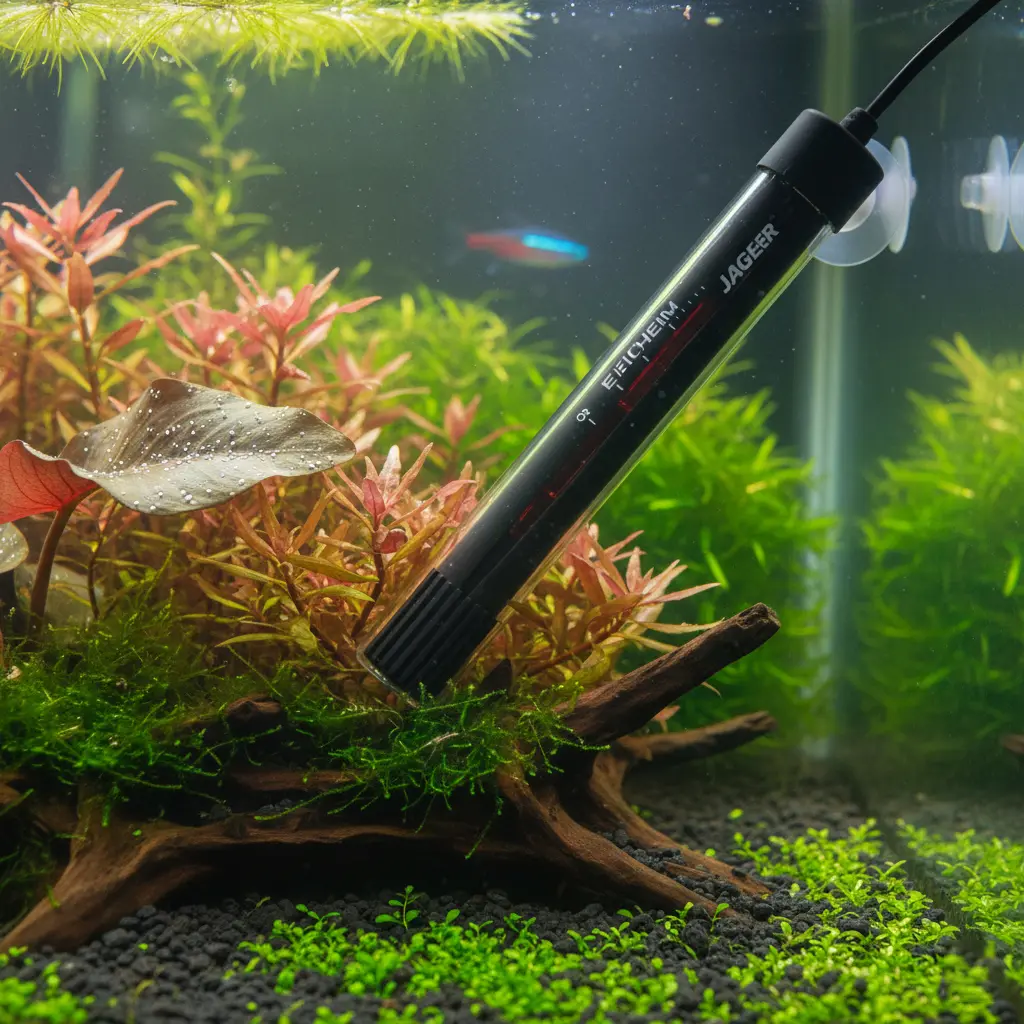
4) Target Temperatures (Popular Species in Malaysia)
Fluval’s article on maintaining consistent aquarium temperature explains why fluctuations of just 1–2 °C can weaken immune response and trigger ich outbreaks — proving that stability matters more than the “perfect” number.
| Category / Fish | °C Range | Notes |
|---|---|---|
| Community (tetras, rasboras, corydoras) | 24–26 | Balanced for plants & fish |
| Betta splendens | 26–28 | Warmer improves activity & immunity |
| Dwarf gourami / honey gourami | 25–27 | Avoid temp dips with night AC |
| Shrimp (neos) | 22–25 | Stable mid-range; avoid >28 |
| Goldfish (fancy) | 20–23 | Not “tropical”; cooler & stable |
| Planted aquascapes (mixed) | 24–26 | Algae balance + plant comfort |
aquarium temperature control Malaysia tip: choose a single target (e.g., 25.5 °C) and keep ±0.5 °C. A stable aquarium heater Malaysia configuration lets you hold that balance all year, even during monsoon drops or air-conditioned nights — stability truly beats chasing “perfect numbers”.”.
5) Placement, Flow & Cable Hygiene
Place near strong flow (filter outlet or inline) so heat disperses evenly.
Horizontal near bottom for even stratification; vertical near flow also works—avoid dead zones behind hardscape.
Cable loops: create a drip loop below power socket; keep the controller off the floor.
Thermometer: always validate heater reading with an independent thermometer.
fish tank heater Kuala Lumpur pro move: in tall 2–3 ft tanks, run two heaters at different ends for evenness.
6) Safety & Maintenance (Malaysia-Specific) (tropical fish heater Malaysia)
Power surges / outages: use a surge protector; for sensitive setups, a small UPS on controller keeps logic alive.
Glass protection: never power on dry; allow heaters to cool before exposing to air; use guards where plecos/oscars present.
Limescale & biofilm: wipe every water change (see: Aquarium Maintenance Malaysia).
Annual check: replace budget units every 12–18 months; test thermostats quarterly.
Electrical Safety & Humidity in Malaysian Homes
Many aquariums here run beside windows or air-conditioners where humidity condenses around sockets. Always use drip loops, RCD/ELCB protection, and mount controllers at least 30 cm above the floor. When adding power strips, choose surge-protected bars rated > 2 kW; cheap ones fail under heater + filter + light loads.
For café tanks or offices that run 24 hrs, a smart-plug energy monitor helps track power draw—most 100 W heaters cost only RM4–5/month to run. Regular checks not only save energy but extend heater lifespan.
By following these simple routines, your aquarium heater Malaysia setup remains stable, efficient, and safe for both fish and owner.
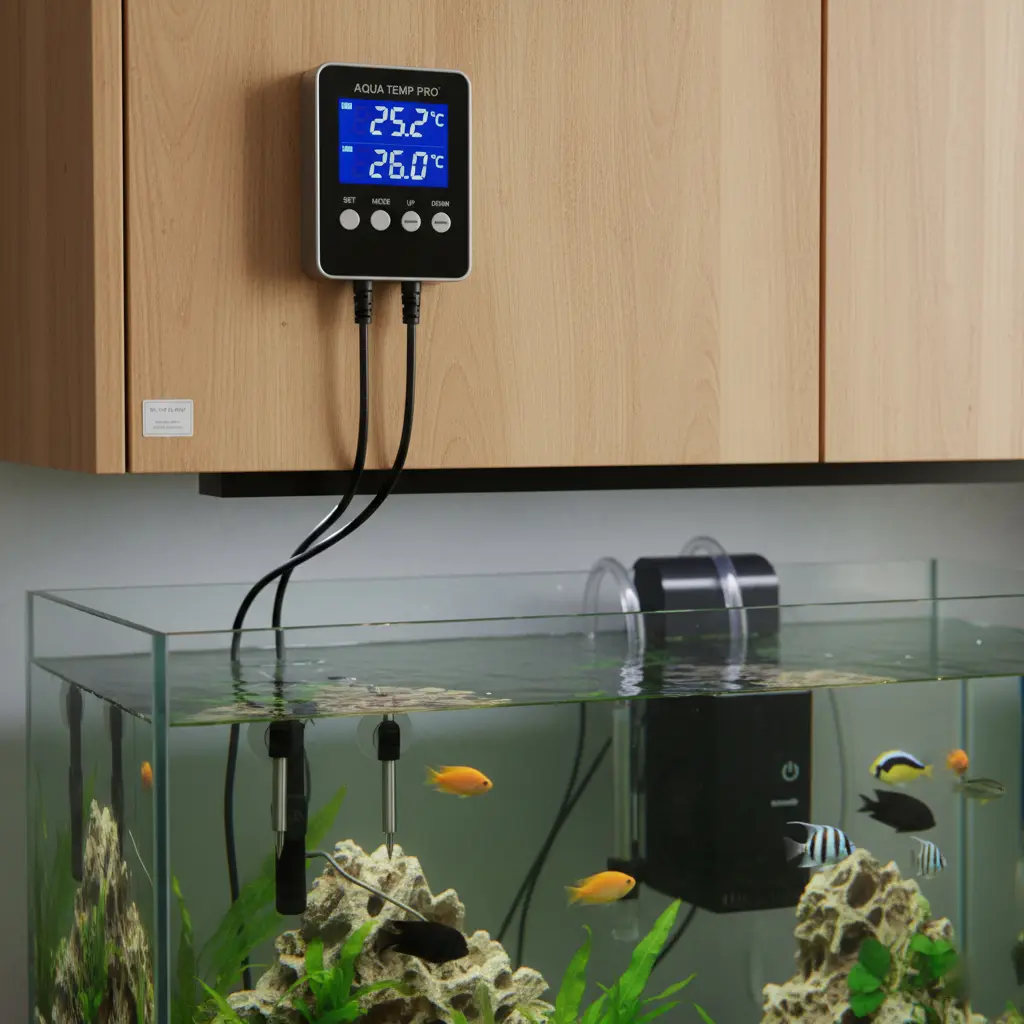
7) Choosing the Best Aquarium Heater Malaysia (Budget → Premium)
Budget (reliable basics):
Glass submersible with dial + guard, 50–200 W sizes; pair with separate digital thermometer.
Mid-range (better stability):
Titanium stick + external digital controller; quick recovery after water changes; robust for offices/shops.
Premium (display & precision):
Inline heaters on canister filters; controller with dual-probe and Wi-Fi alerts; hide all hardware for aquascapes.
For store/brand suggestions and 240 V compatibility, visit us in Kepong or WhatsApp our team.
8) Case Study — Kepong Condo, 3-ft Planted Tank
Problem: AC-heavy nights dropping from 26 °C to 22.5 °C; tetras stress; fungus on fins.
Fix: 2 × 100 W titanium heaters + dual-probe controller; set 25.5 °C; alarm at 24.5/26.5; reposition outflow for better circulation.
Result (3 weeks): temp swing ±0.4 °C; zero new infections; plant pearling improved; client electricity impact minimal.
See related builds: Custom Aquarium Malaysia | Aquarium Water Quality Malaysia
9) Common Mistakes (And Quick Fixes)
| Mistake | What Happens | Fix |
|---|---|---|
| One oversized heater only | Overheat risk if thermostat sticks | Split into two units + controller |
| No thermometer | You “think” it’s 26 °C | Add a separate digital thermometer |
| Heater in dead zone | Stratified layers, cold spots | Move near outflow / increase flow |
| Setting temp too high | Algae, low O₂, shrimp stress | 24–26 °C suits most communities |
| Running dry during WC | Heater cracks | Switch off 15 min before WC |
10) FAQs — Aquarium Heater Malaysia
If your room never drops below 26 °C, maybe not. But AC nights and rain can dip temps—stability is key. A small heater or controller is cheap insurance.
Use 2.5–5 W per litre total; split across two heaters for redundancy.
Near strong flow so heat spreads evenly; validate with a thermometer on the opposite side.
Yes—especially in AC-cooled rooms. They prevent overheating and flatten daily swings.
Use a guard; keep setpoint 26–27 °C; ensure gentle flow so fins aren’t dragged.
11) Conclusion
The right aquarium heater Malaysia setup protects your fish from silent stress and helps every aquarist maintain peace of mind — whether your tank is in a condo or café: temperature swings. Choose appropriate wattage, split units, place by flow, and verify with a thermometer. Lock in 24–26 °C (or species-specific targets) and enjoy a calm, healthy tank.
Aqua Arte Kepong
📍 Kepong, Kuala Lumpur | 💬 WhatsApp us
Read next: